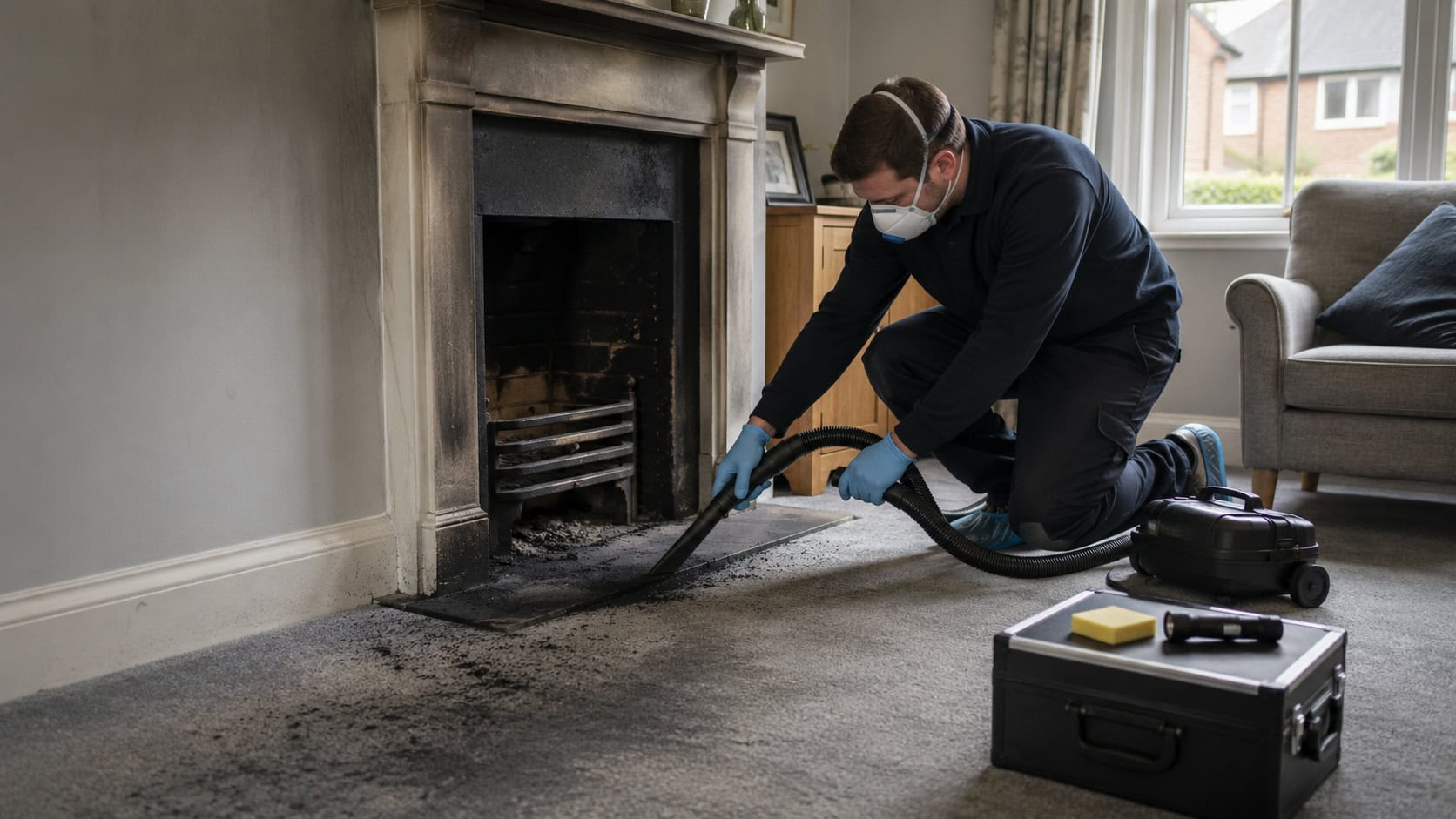
Fire and Smoke Damage Restoration: What Homeowners Need to Know
Fire and smoke damage is one of the most distressing situations a homeowner can face. Even when a fire has been contained quickly, the effects on carpets, soft furnishings and hard floors can be extensive. Soot, smoke odour and heat damage penetrate far beyond what’s immediately visible.
This guide explains what fire and smoke damage restoration involves, why professional assessment is essential, and how trained specialists approach the process. For guidance on a related emergency situation, see water damage restoration: steps to save your carpets and floors.
The extent of fire and smoke damage
The immediate visual damage from a fire is charring, discolouration and obvious soot deposits, but that’s only part of the picture. Smoke travels through a building rapidly, depositing fine particles on surfaces far from the source. These particles carry acidic compounds that continue to cause damage even after the fire is out, breaking down fibres and finishes if not addressed promptly.
Smoke odour is similarly pervasive. It’s absorbed into carpet fibres, upholstery, curtains and soft furnishings, and can’t be eliminated by ventilation or home cleaning products alone.
Why home cleaning is not sufficient
Attempting to clean fire or smoke-damaged items at home can worsen the situation:
- Rubbing soot can grind particles deeper into carpet fibres and cause permanent staining.
- Applying moisture to smoke-damaged carpets without the correct products and equipment can set odours rather than remove them.
- DIY cleaning methods often fail in these situations because they aren’t designed for the chemical complexity of smoke residue.
The same applies to furnishings and curtains. Smoke residue on delicate fabrics or leather requires specialist treatment. Standard cleaning approaches risk causing further damage rather than restoring the item.
What professional fire and smoke damage restoration involves
A trained restoration specialist will begin with a thorough assessment to understand the extent of the damage, identify which items can be restored and determine the appropriate methods for each surface type.
The restoration process typically involves dry soot removal using specialist equipment before any wet cleaning takes place. This step is critical. Attempting wet cleaning before dry removal forces soot particles deeper into the material. Deodourisation then addresses smoke odour at a molecular level, rather than masking it.
Carpets, upholstery, rugs and curtains may all require different approaches. A specialist with experience across multiple surfaces (including knowledge of carpet fibre types and leather and soft furnishing care) is best placed to make these judgements.
Acting quickly matters
The longer smoke residue and soot remain in contact with carpets, furnishings and hard floors, the more difficult restoration becomes. Acidic smoke particles cause progressive damage, and odour compounds become more deeply embedded over time. Contacting a professional restoration specialist as soon as it is safe to do so gives the best chance of successful restoration. The same principle applies to smoke smell in upholstered furniture, which is difficult to address without professional-grade deodourisation.
Hard floors and fire damage
Hard floors in fire-damaged properties may also require specialist attention. Soot deposits and smoke residue affect hard floor surfaces differently depending on the material, and cleaning methods that would be appropriate under normal circumstances might be unsuitable following fire damage.
A professional will assess whether the floor surface can be cleaned and restored or whether it has been too severely affected.
Working with your insurance company
Most home insurance policies cover fire and smoke damage, including the cost of professional restoration. It’s worth documenting the damage thoroughly with photographs before any cleaning or restoration work begins, and keeping records of all professional assessments and work carried out.
A professional restoration specialist can provide a written assessment of the damage and the work required, which might be needed to support an insurance claim.
Need help with fire and smoke damage?
Fire and smoke damage restoration is specialist work that goes well beyond standard cleaning. The combination of soot, odour and chemical damage requires trained professionals with the right equipment and knowledge to address effectively. Members of the National Carpet Cleaners Association (NCCA) are trained and insured to work with carpets, hard floors and soft furnishings, including in damage restoration situations.
You can find a trained, insured NCCA cleaner using our directory. Professional fire and smoke damage restoration can salvage more than you might expect and help return your home to normal as quickly as possible.