How to Clean and Care for Solid Hardwood Floors
Solid hardwood floors are valued for their natural appearance and longevity, but they require more careful maintenance than many other floor types. Because they’re made from a single piece of timber throughout, they are particularly sensitive to moisture, heat and unsuitable cleaning products.
This guide explains how to clean and care for solid hardwood floors day to day, which mistakes to avoid, and when professional attention is the right course of action. For a broader overview of hard floor care, see our guide to hard floor cleaning and restoration.
Why solid hardwood needs careful cleaning
Unlike engineered wood or laminate, solid hardwood can be sanded and refinished multiple times over its lifetime. But that lifespan depends on how it is maintained. Excess moisture is the most common cause of damage. Water causes the timber to expand and contract, which can lead to warping, cupping or gapping between boards.
The surface finish (oil, wax or lacquer) also affects how the floor should be cleaned. Cleaning a hard floor incorrectly is one of the most common reasons floors lose their appearance prematurely.
Day-to-day maintenance
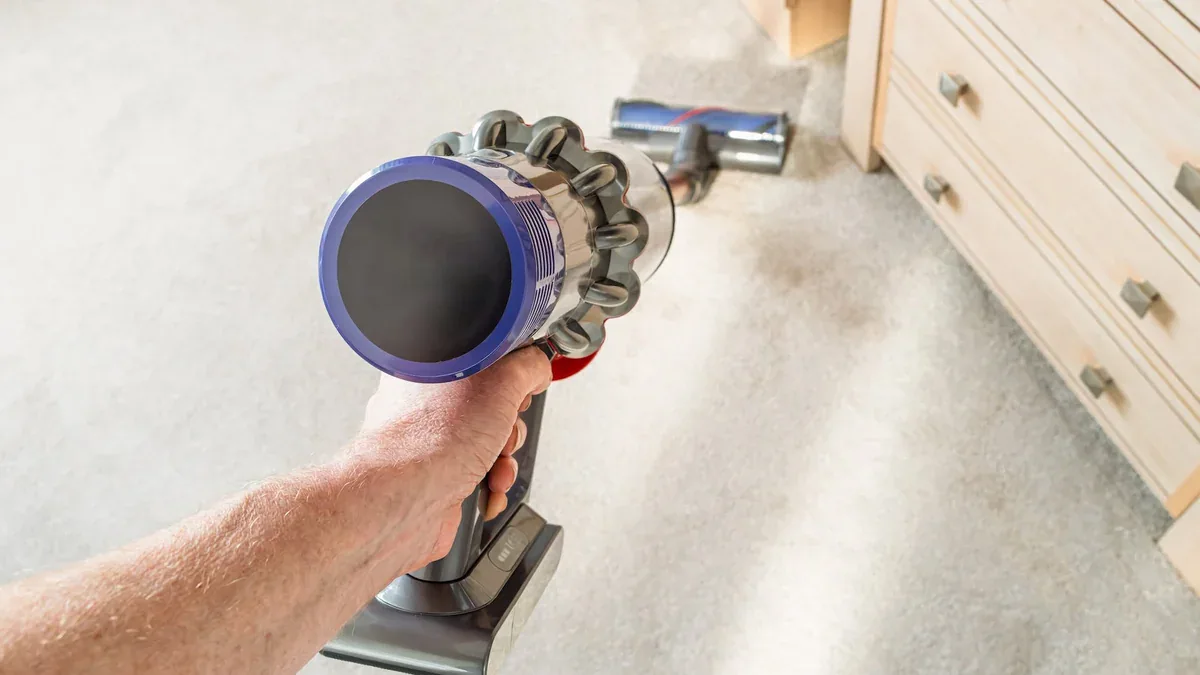
Regular dry cleaning is the single most effective thing you can do to protect a solid hardwood floor. Fine grit and dust particles act as an abrasive underfoot, wearing down the surface finish over time. Sweeping or vacuuming regularly (using a soft-bristle head rather than a beater bar) removes this before it causes damage.
Door mats at entrances help reduce the amount of grit and moisture brought onto the floor. In kitchens and hallways, felt pads under furniture legs help prevent surface scratches.
Dealing with spills
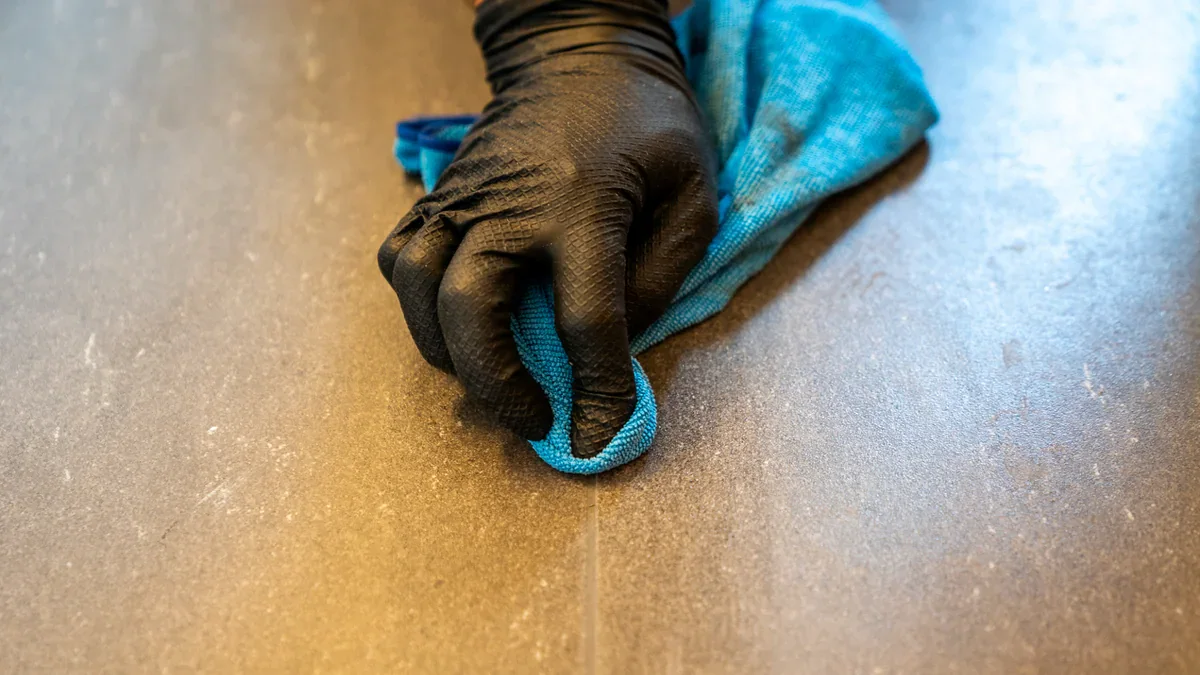
Spills should be dealt with immediately. Wipe up liquid with a dry or barely damp cloth, working from the outside of the spill inwards to prevent spreading. Don’t leave moisture sitting on the surface, and avoid using a soaking wet cloth.
For sticky residues, a slightly damp cloth followed by an immediate dry wipe is usually sufficient. Avoid scraping the surface with anything abrasive.
Mopping solid hardwood floors
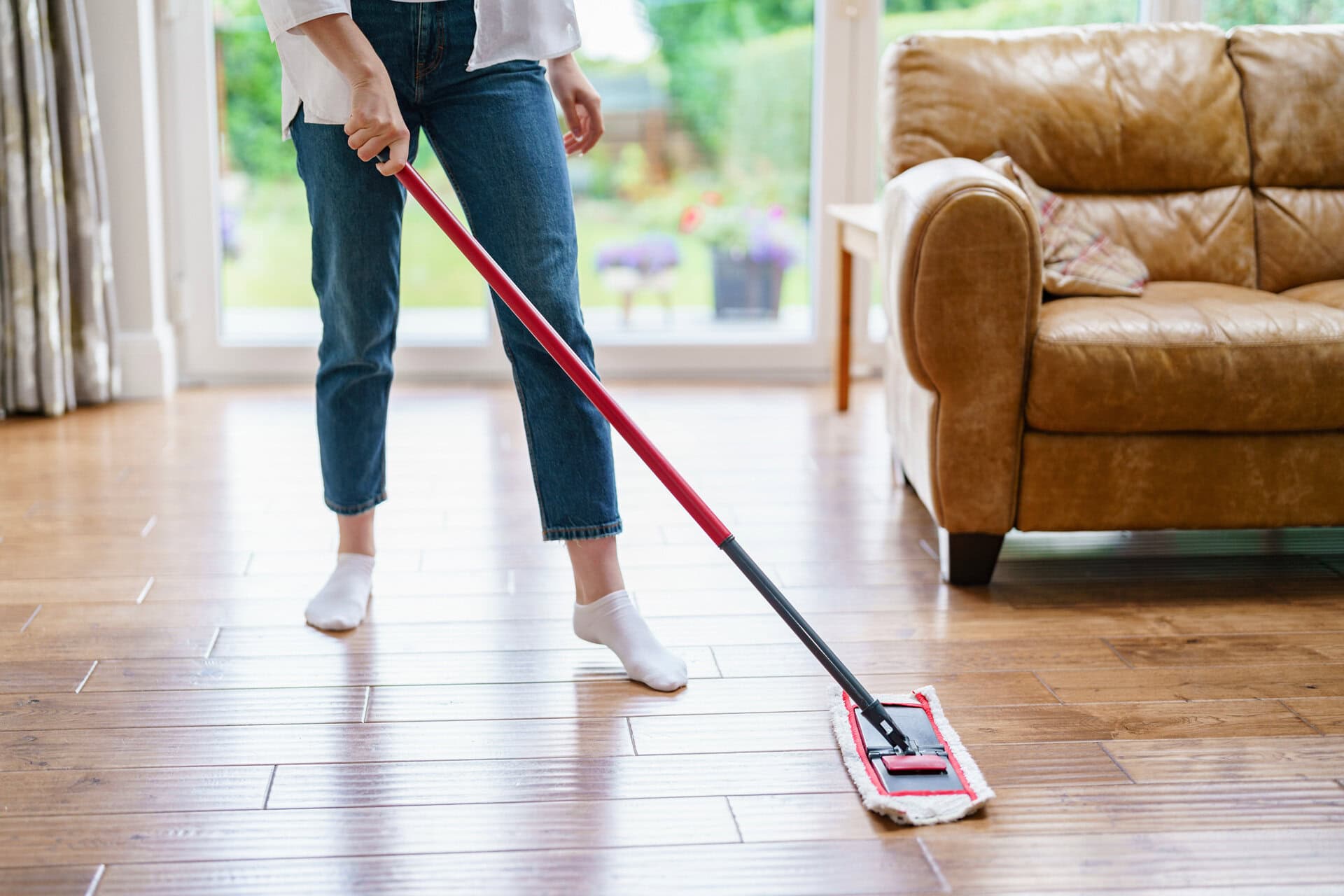
Mopping is where many people inadvertently cause damage. Solid hardwood should only ever be damp mopped, never wet mopped. The mop should be wrung out thoroughly so that it’s barely damp, and any moisture left on the surface should be dried off afterwards.
Steam mops should not be used on solid hardwood. The heat and moisture they introduce can cause serious and often irreversible damage. This applies equally to LVT and other hard floor types unless the manufacturer specifically confirms otherwise.
Choosing the right cleaning products
Stick to products specifically formulated for hardwood floors, and only those compatible with your floor's finish. General household cleaners, multi-surface sprays, vinegar and washing-up liquid can all strip or dull the surface coating.
If you’re unsure what finish your floor has, a professional can identify it and recommend appropriate products.
Protecting the floor over time
Preventing damage is considerably easier than repairing it:
- Keeping humidity levels reasonably stable indoors helps reduce the expansion and contraction that causes boards to move.
- Avoiding direct sunlight on the floor (using blinds or rugs in sunny rooms) slows fading and surface degradation.
- Rugs in high-traffic areas provide additional protection for the most vulnerable parts of the floor.
When to call a professional
If a solid hardwood floor has developed a dull, cloudy or uneven appearance despite careful cleaning, the issue may be residue build-up or damage to the surface finish rather than soiling. In these cases, home cleaning methods are unlikely to resolve the problem and may make it worse.
A professional hard floor specialist can assess the floor, carry out deep cleaning where needed, and advise on refinishing if the surface has been worn through. Hard flooring differs from carpet in how it’s cleaned and restored, and the right professional will understand those differences.
Care for your solid hardwood floors with the NCCA
Solid hardwood floors reward careful, consistent maintenance. Keeping moisture to a minimum, using the right products and addressing problems early are the most effective ways to protect your floor. Members of the National Carpet Cleaners Association (NCCA) are trained and insured to clean and restore a wide range of hard floor types, including solid hardwood.
You can find a trained, insured NCCA cleaner using our directory. Professional hard floor care can help maintain your floor's appearance and protect it for the long term.