Cleaning Ceramic & Porcelain Tile: An Expert's Guide
Ceramic and porcelain tiles are found in kitchens, bathrooms, hallways and conservatories across the UK. As well as being durable and water resistant, they’re relatively easy to look after. Even so, the wrong products or methods can leave them dull, streaky or slippery. Grout lines also tend to discolour long before the tiles themselves.
This guide explains how ceramic and porcelain differ, what everyday care looks like, and which common habits can cause problems. It also covers when cleaning ceramic and porcelain tile is best left to a professional.
How ceramic and porcelain tiles differ
Both types are made from fired clay, but they don't behave in exactly the same way. Porcelain is fired at a higher temperature using finer clay. This makes it denser and less absorbent than most ceramic tiles.
Ceramic tiles usually have a glazed surface over a softer, more porous body. The glaze resists staining well, but chips or worn areas can expose the material underneath.
Porcelain may be glazed, unglazed or polished. Unglazed and textured anti-slip porcelain can hold onto dirt in its surface. Polished porcelain can look flawless but may have tiny pores that trap staining if it hasn't been sealed.
Why grout needs extra attention
Grout is often the weak point of a tiled floor. Most grout is cement-based and porous, so it absorbs spills and cleaning residue. Over time, light grout can turn grey or brown even when the tiles look clean.
Grout lines also sit slightly lower than the tile surface. Mops tend to push dirty water into them rather than lifting it out. This is one of the main reasons tiled floors can look tired despite regular cleaning.
Everyday care for tiled floors
Regular dry cleaning is the foundation of good tile care. Sweeping or vacuuming removes grit that can scratch glazes and wear down grout. A soft brush or a vacuum with a hard floor setting is usually best.
For damp mopping, a pH-neutral floor cleaner is a sensible choice for most tiles. Use it at the dilution the manufacturer recommends, as more product doesn't mean a cleaner floor. Change the water regularly so you're not spreading dirty water across the surface.
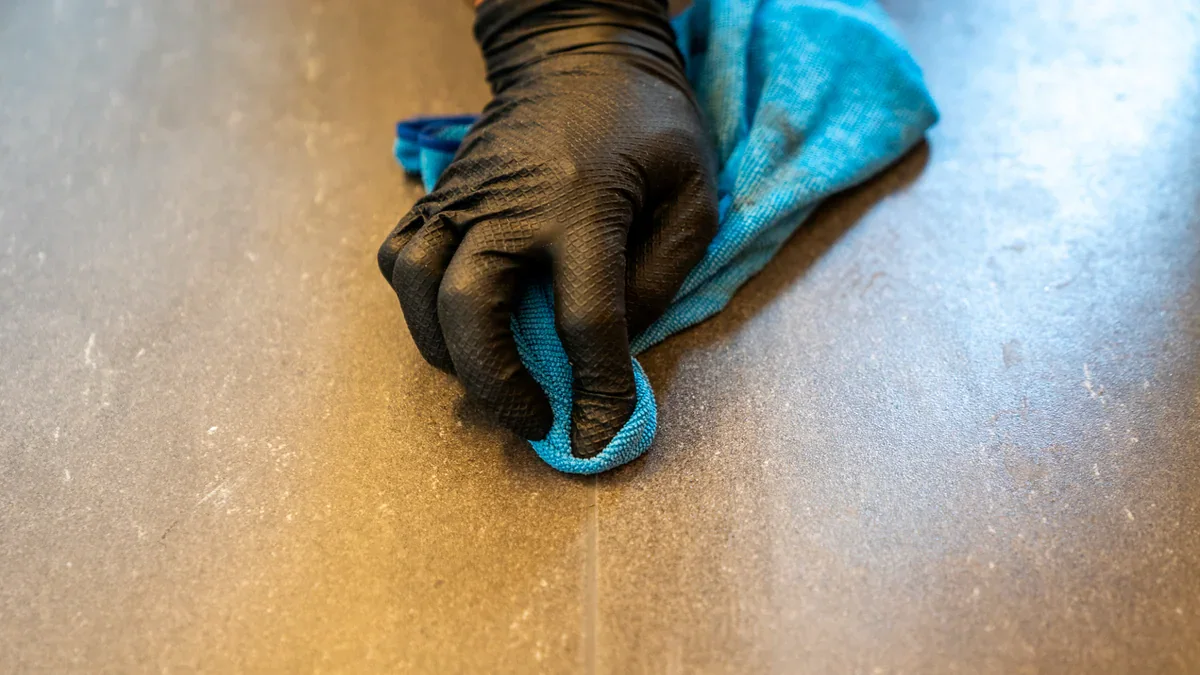
Wipe up spills promptly, particularly oils, red wine, tea and coffee. Blot rather than rub, then rinse the area with clean water. Placing mats at entrances can also reduce the amount of soil that reaches the floor.
Related: Hard Floor Cleaning Mistakes That Damage Your Flooring
Common mistakes to avoid
Many tile problems are caused by well-meaning cleaning. The following habits are some of the most common culprits:
- Using vinegar or acidic cleaners, which can etch cement-based grout over time
- Using bleach on coloured grout, which may cause patchy fading
- Applying wax, oil or "shine" products, which can leave a slippery film that attracts dirt
- Scrubbing with wire wool or harsh abrasive pads, which can scratch glazes and polished porcelain
- Leaving too much detergent behind, which causes streaks and a sticky surface
Residue is a particular issue. A floor that looks dull straight after cleaning is often coated in product rather than dirt. Rinsing with clean water can help, but heavy build-up may need specialist treatment.
The science behind stain removal explains why stronger products rarely fix the problem.
What professional tile and grout cleaning involves
A trained professional will start by identifying the tile type, its finish and the condition of the grout. This matters because cleaning methods that suit glazed ceramic may not be right for polished or unglazed porcelain.
Professional cleaning often uses specialist solutions with controlled agitation and hot water extraction. This lifts soil out of grout lines and textured surfaces rather than spreading it around. Residue from previous products can also be removed safely.
Once the floor is clean, a professional may recommend sealing the grout. Sealing can make grout more resistant to staining and easier to maintain. In some cases, grout recolouring may also be offered to restore an even appearance.
A guide to hard floor cleaning and restoration covers these services in more detail.
Bringing tired tiles back to life
Ceramic and porcelain tiles can last for decades with the right care. Gentle, regular cleaning with suitable products will keep most floors looking their best.
Professional help is worth considering if your grout has darkened, your tiles look dull despite careful cleaning or the floor feels slippery. It's also a good idea before sealing, or when you've moved into a property with heavily soiled tiles. A trained professional can assess the floor and restore it safely.
If your home has a mix of flooring, the differences between cleaning hard flooring and carpet are worth understanding too.
You can find a trained, insured cleaner through the National Carpet Cleaners Association (NCCA) by visiting our directory. Professional tile and grout cleaning can bring back the clean, bright finish your floor had when it was first laid.