How to Clean Engineered Wood Flooring Without Damaging It
Engineered wood flooring looks and feels like solid wood because its surface is real timber. Underneath, though, it's built differently, and that affects how it should be cleaned. The wrong products or too much water can dull the finish, damage the joints between boards and, over time, shorten the life of the floor.
This guide explains what makes engineered wood different, how to keep it clean day to day and which common habits to avoid. It also covers when professional cleaning or restoration is worth considering.
What makes engineered wood different
Each engineered board has a top layer of hardwood, often called the wear layer, bonded to a core of plywood or high-density fibreboard. The core makes the board more stable than solid wood, so it's less likely to move with changes in temperature and humidity.
The wear layer is the only part you walk on, and its thickness varies a great deal between products. Whether a floor can be sanded and refinished, and how many times, depends on that thickness, the way the boards are made and the manufacturer's instructions. Some products can't be sanded at all. Your flooring supplier or the manufacturer's product information should tell you what applies to yours.
Check your finish first
Most engineered floors are either lacquered or oiled, and the two need different care.
Lacquered floors have a protective coating that sits on top of the wood. They're generally easier to look after and mainly need a suitable wood floor cleaner, with a refresher product applied occasionally if the manufacturer recommends one.
Oiled floors have oil that soaks into the wood itself. They have a more natural look but need periodic re-oiling to stay protected, and usually a cleaner designed for oiled finishes.
Using a product made for the wrong finish can leave residue, streaks or a patchy sheen. If you're not sure which you have, check your paperwork or ask the supplier.
A safe everyday routine
Grit is the biggest enemy of any wood floor. Small particles carried in on shoes act like sandpaper on the surface, so removing them regularly does more good than any cleaning product.
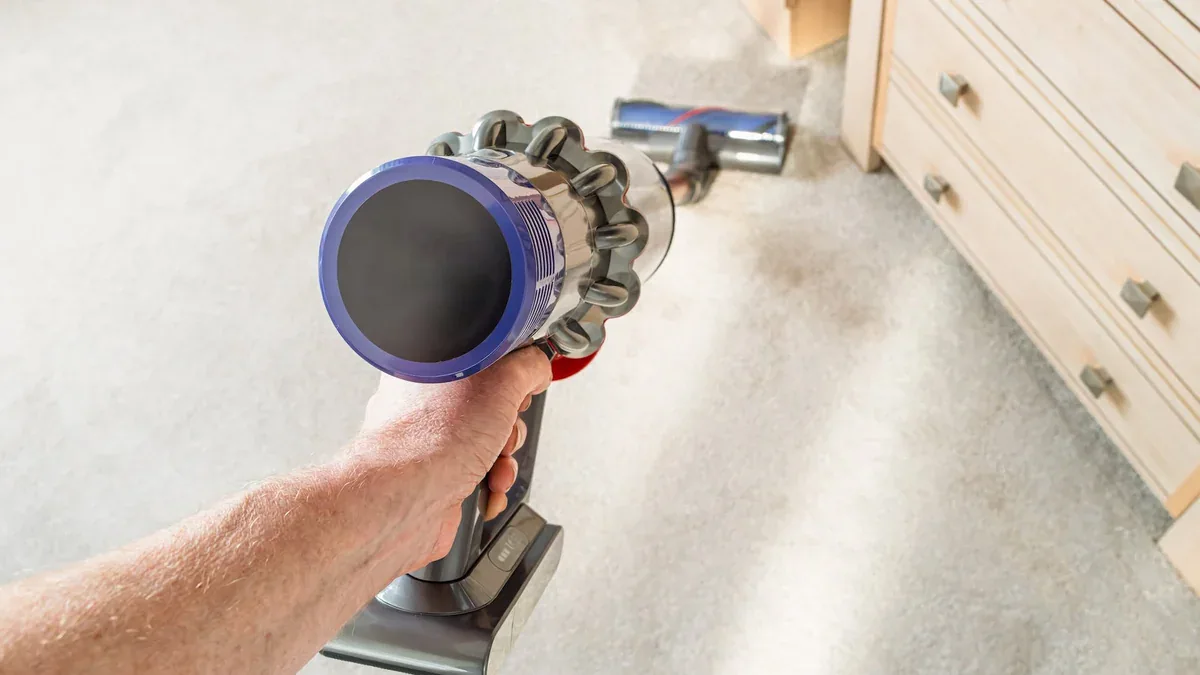
- Vacuum with a hard floor head, or use a soft brush or dry microfibre mop, several times a week
- Use doormats at entrances to stop dirt being carried in
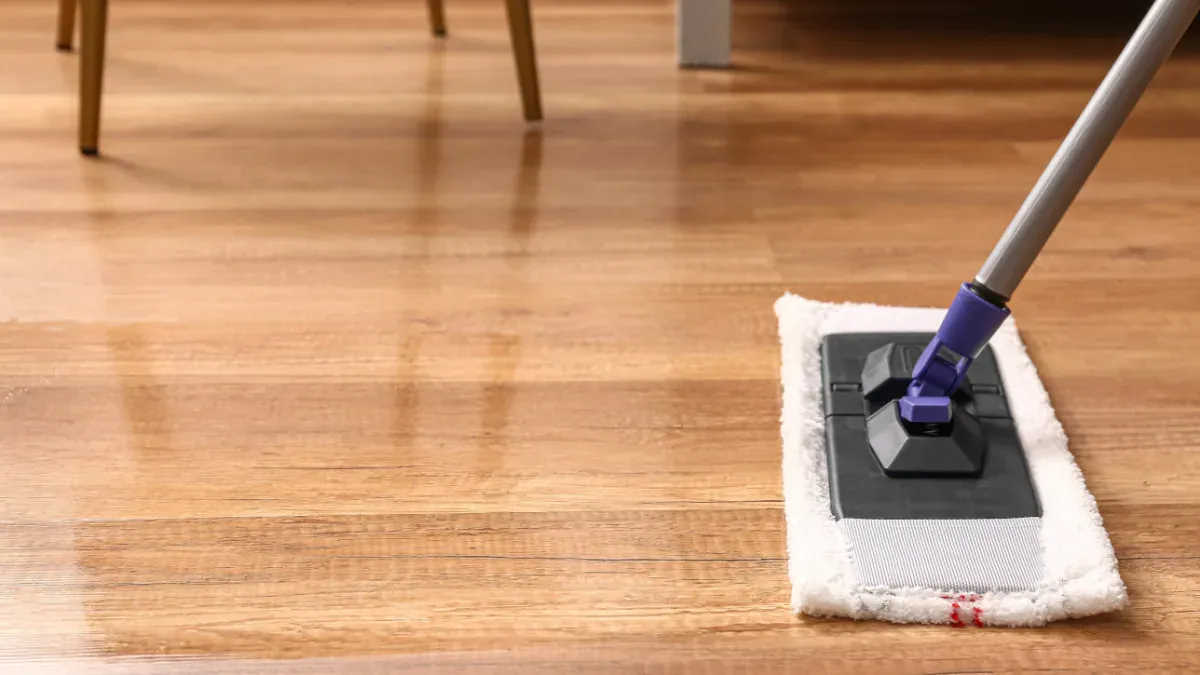
- For a deeper clean, use a well wrung-out microfibre mop with a cleaner recommended for your floor's finish
- Wipe up spills straight away
Manufacturers set their own guidance on how much moisture their floors can take, so check yours. Tarkett, for example, advises always using a damp mop and never a soaking wet one, and some manufacturers specify that the floor should be dry again within a minute or so of cleaning. If the surface stays wet for long, too much water is being used.
What to avoid
- Steam mops: most manufacturers advise against them, as heat and moisture can be forced into the joints and damage the finish or the bond between layers
- Wet mopping or buckets of water, which can seep between boards and cause swelling
- Vinegar, bleach and general-purpose cleaners, unless your manufacturer specifically recommends them, as they can dull or strip the finish
- Abrasive pads and scouring powders, which scratch the surface
- Polishes or waxes not designed for your finish, which can build up and leave the floor cloudy or slippery
Always check the manufacturer's care instructions, as they take priority over general advice. Some products have specific requirements, and using the wrong method could affect a warranty.
Dealing with spills, scuffs and marks
Blot liquid spills with a dry cloth as soon as possible, then wipe the area with a damp cloth and dry it. For sticky marks, apply a small amount of a suitable wood floor cleaner to a cloth rather than spraying it straight onto the floor.
Light scuffs on a lacquered floor can often be lifted with a cloth and cleaner, but deeper scratches through the finish usually need professional attention. To prevent damage in the first place, fit felt pads to chair and table legs and avoid dragging heavy furniture.
When professional cleaning helps
Over time, even a well-kept floor can build up ingrained dirt and old product residue that normal cleaning won't shift. A trained hard floor specialist can assess the finish and the wear layer, deep clean the surface and, where the manufacturer's instructions allow, re-oil or refresh the finish. Sanding and refinishing may be possible on some floors, depending on the wear layer and construction, but not on others.
Not every floor can be restored in the same way, so a professional assessment is the best place to start. Our guide to hard floor cleaning and restoration explains these services in more detail, and our article on hard floor cleaning mistakes covers other habits that can cause damage.
Keeping your floor looking its best
Engineered wood can last for many years with gentle, regular care. Keep grit off the surface, use as little water as possible and stick to products made for your finish. If you also have solid wood or laminate elsewhere in your home, our guides to solid hardwood floors and laminate flooring explain how their care differs, and our comparison of hard flooring and carpet may help if you have both.
You can find a trained, insured cleaner through the National Carpet Cleaners Association (NCCA) by visiting our directory. It's worth checking that the cleaner you choose offers hard floor cleaning before you book.