Curtain Cleaning at Home vs Professional Cleaning: What You Need to Know
Curtains are often overlooked when it comes to household cleaning, yet they collect dust, allergens and cooking odours over time. Knowing when home cleaning is appropriate (and when professional cleaning is the better option) can help protect your curtains and keep them looking their best.
This guide explains what curtain cleaning at home can safely achieve, where the risks lie and what professional cleaning offers that DIY methods cannot.
Why curtains need regular cleaning
Curtains hang in rooms where dust, moisture and airborne particles accumulate. Over time, this leads to a gradual build-up that affects both appearance and air quality. In kitchens and bathrooms, steam and cooking residue add to the problem. Homes with pets or allergy sufferers may find that curtains trap more than they realise.
Regular cleaning helps maintain the condition of the fabric and reduces the build-up of allergens and airborne pollutants that can affect indoor air quality.
What curtain cleaning at home can achieve
Routine vacuuming using an upholstery attachment is the simplest and safest form of home curtain care. Running the attachment gently over the fabric removes surface dust before it becomes embedded. This should be done with care to avoid snagging delicate fabrics or pulling curtains from their fixings.
Shaking curtains outdoors, where practical, can also help dislodge loose dust. Some lighter curtains made from robust synthetic fabrics may be suitable for machine washing, but this depends entirely on the fabric type, construction and care label instructions.
The risks of cleaning curtains at home
Curtain fabrics vary enormously. Many are made from delicate or blended materials that react badly to machine washing, including shrinkage, colour bleeding and loss of shape. Lined curtains carry additional risks, as the lining and outer fabric may respond differently to moisture and heat.
Thermal or blackout linings, interlined curtains and those with specialist coatings are particularly vulnerable. Once shrinkage or distortion occurs, it’s rarely reversible. And curtains that no longer hang properly or fit their window can’t easily be corrected.
Even curtains that appear to be washable may have fixings, hooks or headings that are damaged by water or agitation. Checking the care label is essential, but labels don’t always account for every component of the curtain's construction.
What professional curtain cleaning offers
Professional cleaning removes the guesswork. A trained cleaner will assess the fabric type, construction and condition before deciding on the appropriate method. This significantly reduces the risk of damage that can result from unsuitable home cleaning.
Professional methods can address ingrained dirt, odours and staining that routine vacuuming cannot reach. The results are generally more thorough and longer-lasting than home cleaning, particularly for heavier or more complex curtains.
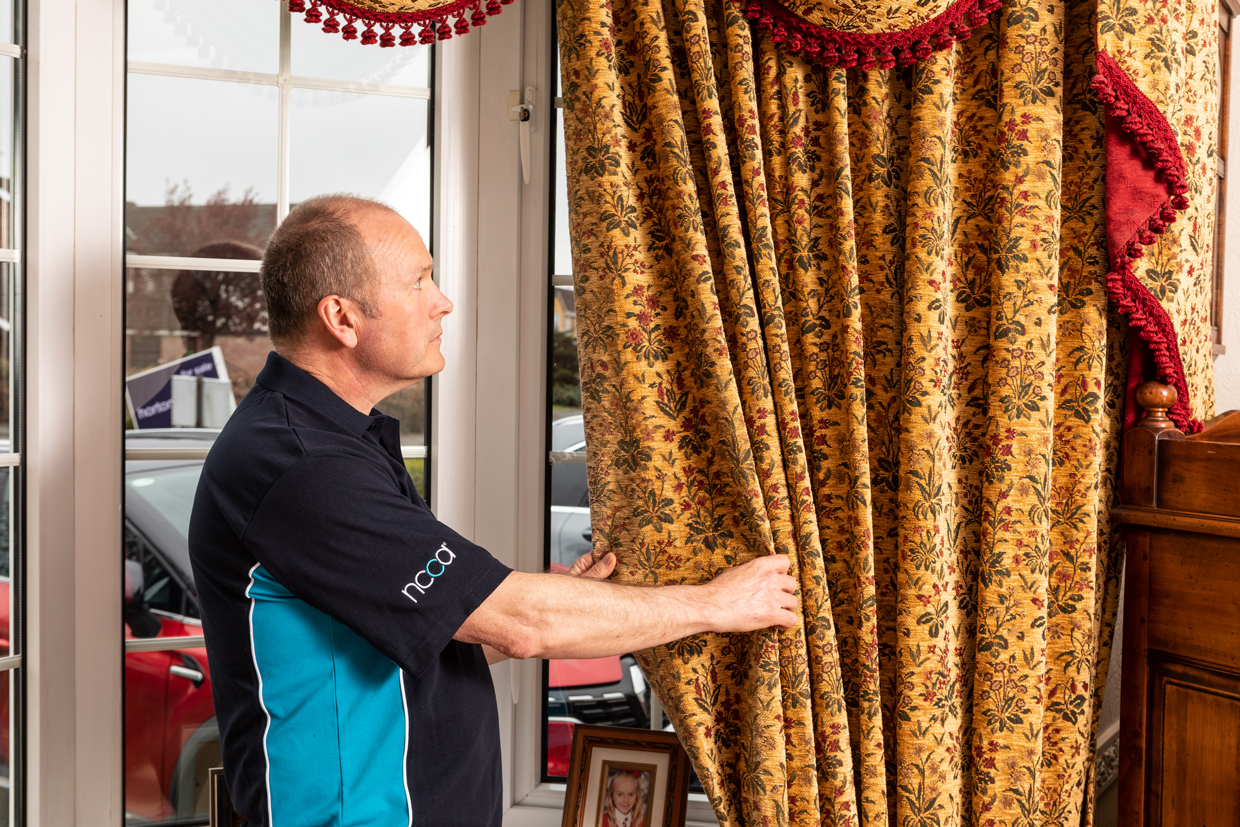
Some professional cleaners also offer an in-situ service, cleaning curtains while they remain hanging. This avoids the risks associated with taking curtains down and re-hanging them, and is particularly useful for large, heavy or difficult-to-remove window treatments.
The benefits of a professional curtain cleaning service go beyond appearance too. Regular professional care can also extend the life of curtains that represent a significant household investment.
When to choose professional cleaning
Professional cleaning is worth considering in a number of situations. It’s recommended for:
- Curtains that haven’t been cleaned for a long time
- Those in rooms with high moisture or cooking residue
- Any curtains made from delicate, lined or specialist fabrics all benefit from professional attention
If you’re unsure about the fabric type or how a curtain was made, professional cleaning is the safer choice. The cost of getting it wrong is almost always higher than the cost of professional cleaning from the outset. In short, we’re talking about replacing curtains that have been damaged beyond repair.
Homes with allergy sufferers may also find that professional cleaning offers more effective allergen removal than home methods can achieve, for similar reasons to professional carpet and upholstery cleaning.
Choosing a trusted professional
Members of the National Carpet Cleaners Association are trained and insured to clean curtains and other soft furnishings safely and effectively. They follow a Code of Practice and understand how to assess and care for a wide range of fabric types.
You can find a trained, insured NCCA cleaner using our directory. Professional curtain cleaning can help protect your investment and keep your home looking and feeling fresh.