How to Clean a Stair Carpet Safely
Stair carpets take more punishment than almost any other carpeted area in the home. Every step compresses the pile, and grit carried in on shoes works its way deep into the fibres.
Cleaning stairs also comes with a few extra risks compared with flat flooring. This guide explains how to clean a stair carpet safely, step by step, without causing damage or a trip hazard.
1. Clear the stairs and check for hazards
Remove any items left on the stairs before you start. A clear staircase reduces the risk of a trip while you're working, particularly if you're using a vacuum cord or cleaning solution.
Check stair rods, grippers or edging for any that are loose. Cleaning around a loose fitting can make it worse, so it's worth securing these first.
2. Vacuum thoroughly, including the edges
Use a vacuum with a strong suction setting and, ideally, a stair or crevice attachment. Work from the top of the staircase downwards.
Pay particular attention to the back edge of each step, where dust and grit tend to collect. This area is often missed but contributes heavily to wear in high-traffic parts of the home.
3. Treat marks and stains carefully
Blot any marks rather than rubbing them, working from the outside of the mark inwards to avoid spreading it further.
Always test a cleaning product on a hidden area first, such as the bottom step or a spot under the nosing. Stair carpet is often the same material as the rest of your carpet, but reactions can vary by wear and exposure.
4. Avoid soaking the carpet
Stairs dry more slowly than open flooring because airflow is more restricted, particularly on carpeted treads and risers.
Excess moisture increases the risk of the carpet slipping underfoot while damp, as well as raising the chance of odours or mould developing underneath.
5. Let the carpet dry fully before use
Avoid using the stairs, where possible, until the carpet is completely dry. A damp stair carpet can be slippery, especially on the nosing of each step.
Opening a window or using a fan can help speed up drying without needing extra heat.
Why stair carpets wear differently
The nosing and centre of each tread take the most pressure, which is why stair carpets often show wear before other areas of the home. Repeated flattening in these spots is a common early sign discussed in guidance on carpet flattened by feet.
Understanding this can help you plan cleaning more frequently in these areas, rather than treating the whole staircase the same way.
When professional cleaning is worthwhile
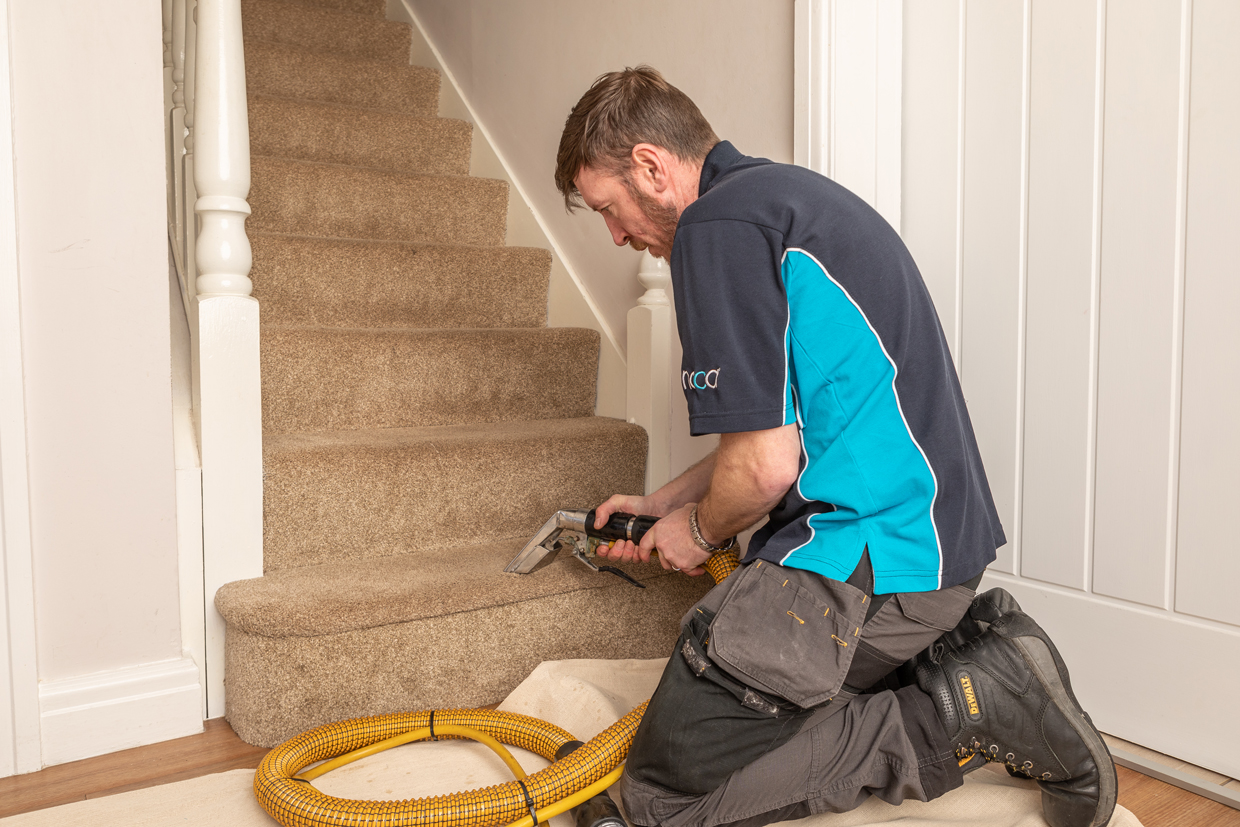
If your stair carpet is heavily soiled, worn or hasn't been deep cleaned in some time, professional cleaning is often the safer option. Stairs can be awkward to treat evenly by hand, and incorrect DIY methods can accelerate wear.
A trained cleaner can also advise on protecting carpets from everyday wear and tear, helping stairs last longer between visits.
Expert help when it's needed
Stair carpets combine heavy wear with a few extra safety considerations, which makes them one of the trickier areas to clean well at home. Members of the National Carpet Cleaners Association are trained and insured to clean stairs safely and effectively.
You can find a trained, insured NCCA cleaner using our directory. Professional stair carpet cleaning can restore its appearance while keeping your staircase safe to use.