
Viscose Rugs: Why They're So Hard to Clean and What to Do Instead
Viscose rugs are popular for good reason. They have a soft, silky sheen that looks luxurious, and they usually cost far less than wool or silk. But viscose is also one of the most difficult rug fibres to clean, and many rugs are damaged by well-meant attempts to deal with a spill at home.
This guide explains what viscose is, why water causes problems and what you can safely do yourself. It also covers when it's time to call in a professional.
What viscose is
Viscose is a regenerated cellulose fibre. Cellulose from wood pulp or other plant material is dissolved, then reformed and spun into fibres that can imitate the look of silk. It's also called rayon, and rugs made from it are often sold under names such as art silk or bamboo silk. Those trade names don't always tell you exactly what a rug is made of, and some rugs blend viscose with wool or other fibres.
That makes viscose neither a natural fibre like wool nor a fully synthetic one like polyester. WoolSafe's guidance on plant-based and regenerated fibres describes them as sensitive to moisture, and advises treating a blended rug as if it were made entirely of its most delicate fibre.
Why water causes problems
Viscose fibres absorb water quickly and lose much of their strength when they're wet. That can lead to several problems:
- Browning or yellowing: as a damp area dries slowly, natural substances in the fibres can be drawn to the tips and discolour, leaving a brown or yellow mark. This is known as cellulosic browning, and high-pH products can make it more likely
- Pile distortion: wet fibres can flatten, twist or mat together, leaving a patch that looks and feels different from the rest of the rug
- Colour bleeding: dyes in some viscose rugs can move when wet
- Stiffness: fibres can feel harsh or crunchy once dry
Even a spill of plain water can leave a visible mark. That's why viscose rugs can be a difficult choice for hallways, dining areas and busy family rooms.
How to tell if your rug is viscose
Check the label on the back of the rug or the product description from the retailer. Words such as viscose, rayon, art silk, bamboo silk or silk-look usually indicate viscose. A very high sheen at a relatively low price is another clue. If you're not sure, a trained rug cleaner can identify the fibre before any cleaning takes place.
What you can safely do at home
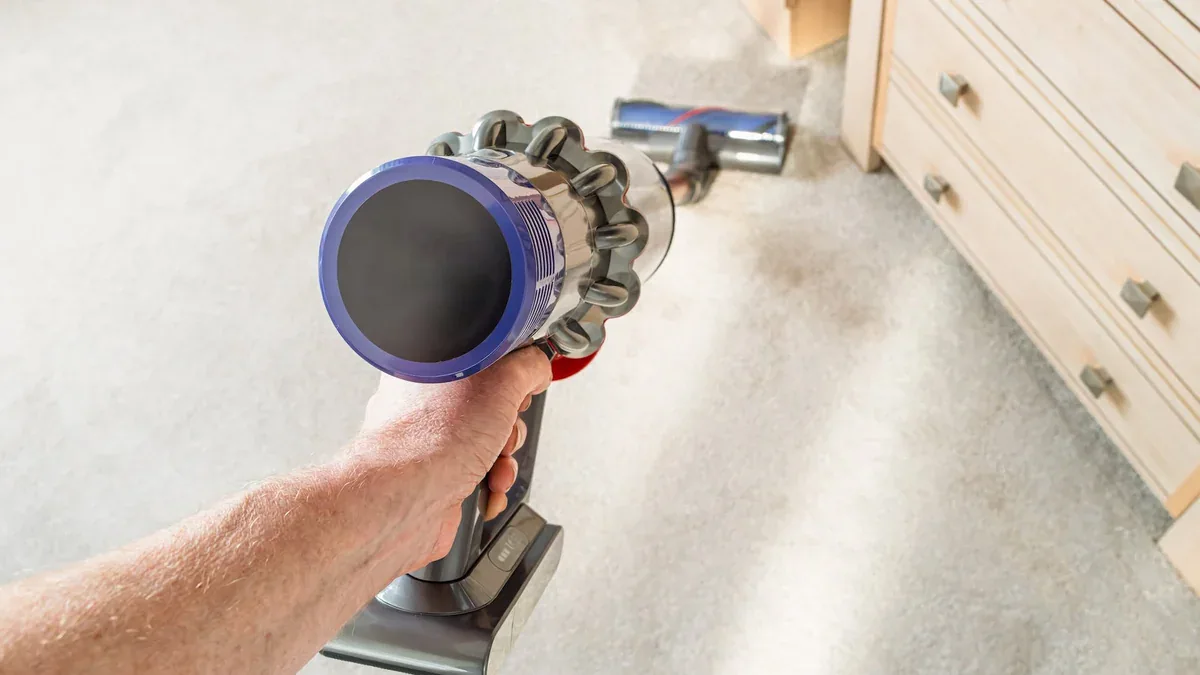
- Vacuum regularly using suction only, or with the brush bar switched off, working in the direction of the pile
- Rotate the rug every few months so it wears evenly
- Blot spills straight away with plain white kitchen roll or a clean, dry white cloth, pressing rather than rubbing
- Never spray water or a spot remover directly onto the rug, which WoolSafe warns can cause pile distortion and water marks
- Help a damp area dry quickly by improving ventilation or using a fan
Avoid carpet shampoos, stain removal sprays, steam cleaners and hired carpet cleaning machines. They all introduce too much moisture or the wrong chemistry, and they're among the most common causes of permanent damage. Our article on the science behind stain removal explains why DIY methods often make things worse.
What to do if it's already marked
If a brown or yellow mark has appeared, or the pile has changed texture, stop treating it. Repeated attempts usually spread the problem or make it permanent.
A professional may be able to reduce browning or improve the texture, but it isn't always possible to reverse the damage completely. A good cleaner will be honest with you about what to expect before they start.
Why specialist cleaning matters
A trained rug cleaner will identify the fibre, check how the rug is made and pre-test before choosing a method. That might be a low-moisture approach, or a controlled wet clean in a rug cleaning facility for a heavily soiled rug, followed by careful drying. There's no single method that suits every viscose rug.
Even with specialist care, some viscose rugs carry an unavoidable risk of texture change or discolouration, because of how they were made or dyed. A good cleaner will explain those risks before starting, and may advise against cleaning if the risk is too high.
Our guide to the benefits of professional rug cleaning covers what's involved, and our advice on caring for rugs between professional cleans can help keep yours looking good for longer.
Looking after a viscose rug
Viscose can look beautiful for years if it's kept dry, vacuumed gently and cleaned by someone who understands the fibre. If you also have wool rugs, our guide to cleaning a wool rug at home explains how their care differs, and if colours have started to dull, our article on faded rugs may help.
You can find a trained, insured cleaner through the National Carpet Cleaners Association (NCCA) by visiting our directory. When you get in touch, ask whether they have experience cleaning viscose rugs.