Cleaning Velvet and Faux Suede Upholstery Without Damaging the Fabric
Photo credit: The Carpet Cleaners Manchester
Velvet and faux suede upholstery has a soft, rich look that few other fabrics can match. That same texture also makes it easy to mark. A spill, a heavy-handed scrub or simply sitting in the same spot can leave patches that catch the light differently from the rest of the sofa.
This guide explains how to care for velvet and faux suede upholstery, what causes the most common marks and when professional cleaning is the safer option. It doesn't cover genuine suede, which is a type of leather.
Know what you've got
Velvet describes the way a fabric is woven, with a short, dense pile, rather than the fibre it's made from. Upholstery velvet can be made from cotton, polyester, viscose or blends, and each reacts differently to moisture and cleaning products. Polyester velvets tend to be the most forgiving, while cotton and viscose velvets are more likely to mark or shrink when wet.
Most suede-look sofas are covered in faux suede, a synthetic microfibre fabric, and that's what this guide refers to. Genuine suede is leather and needs different care, which our guide to leather sofa cleaning covers.
Before cleaning, check the care label, usually found under the seat cushions or on the base of the sofa, along with any instructions from the manufacturer. Some manufacturers use letter codes such as W, S, WS or X to show which types of cleaning product are suitable. A code is a useful starting point, but it doesn't mean any method using that type of product is safe for your fabric. Not every sofa has a code, so if there's no guidance, treat the fabric as delicate.
Everyday care
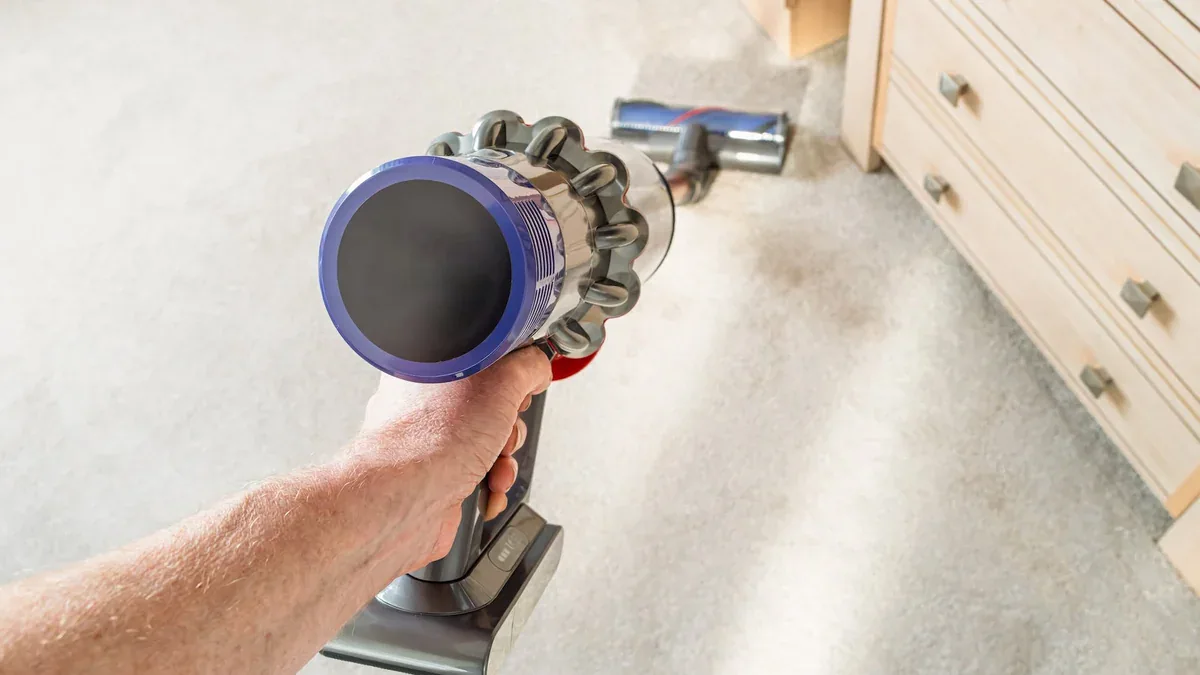
- Vacuum regularly using a soft upholstery brush on a low setting, working in the direction of the pile
- Brush gently with a soft clothes brush to lift the pile and remove dust
- Plump and rotate seat cushions so they wear evenly
- Keep the sofa out of strong direct sunlight, which can fade velvet over time
Pile marks and crushing
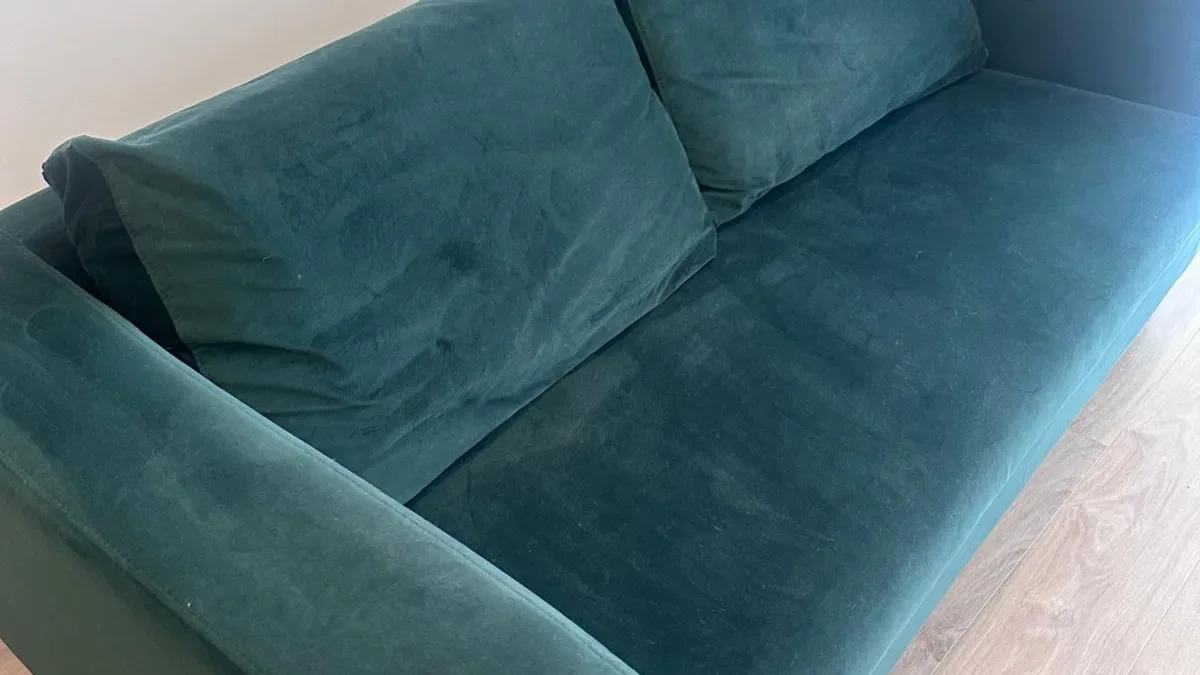
Pressure from sitting, cushions or pets can flatten the pile, creating marks that look lighter or darker depending on the angle. This is a normal characteristic of velvet rather than a fault, and it often eases with use.
Gentle brushing in the direction of the pile can help, but how well a crushed pile recovers depends on the fibre, how the fabric was made and how long the marks have been there. Some velvets are designed to have a crushed or variable look. Check the manufacturer's guidance, and if marks don't improve, ask a trained upholstery cleaner rather than trying heat or moisture yourself.
Spills and water rings
Act quickly but gently. Blot spills with a clean, dry white cloth, pressing rather than rubbing, because rubbing pushes liquid deeper into the pile and can distort it. Work from the outside of the spill inwards.
Using too much water is one of the most common ways velvet and faux suede are damaged. As a wet patch dries, dirt and residue can be drawn to its edges, leaving a visible ring that may be harder to remove than the original spill. If you need to use a cleaning product, check the label first and test it on a hidden area.
What to avoid
- Soaking the fabric or using a lot of water
- Scrubbing, which damages and distorts the pile
- Carpet shampoos and stain sprays that aren't intended for upholstery
- Hairdryers, heaters or steamers on the fabric, which can set marks and harden the fibres
- Ironing, which crushes the pile
Our guide to cleaning upholstery at home has more on what's safe to try yourself.
When to call a professional
Professional cleaning is the safer choice if your sofa needs more than light spot cleaning, if a water ring or stain has already formed, or if the label says solvent only or professional cleaning only. A trained upholstery cleaner will identify the fabric, pre-test cleaning methods on a hidden area and use techniques that keep moisture under control.
Our article on the signs your upholstery needs professional cleaning explains when it's worth booking.
Keeping velvet and faux suede at their best
With regular brushing, careful handling of spills and the right professional help, velvet and faux suede upholstery can keep its look for many years. If you have other fabrics at home, our guides to cleaning a chenille sofa and cleaning a dirty sofa may also help.
You can find a trained, insured cleaner through the National Carpet Cleaners Association (NCCA) by visiting our directory. Ask whether they have experience with velvet and faux suede before you book.