Leather Sofa Cleaning: How to Care for Different Leather Types
Leather sofas are a significant investment, and caring for them correctly can make a considerable difference to how long they last and how well they look over time. The challenge is that not all leather is the same. What works for one type can cause lasting damage to another.
This guide explains the main leather types found in domestic sofas, how to approach leather sofa cleaning at home, and when professional care is the safer option. For a broader overview of professional leather care, see Understanding the Process of Leather Cleaning and Restoration.
Why leather type matters
Leather furniture is produced using a variety of tanning, finishing and coating processes, which create very different surface characteristics. A cleaning product or method suitable for one type may strip the finish, cause discolouration or dry out another.
Before attempting any leather sofa cleaning, it's important to identify what type of leather you have. Common mistakes to avoid with leather furniture include using unsuitable products and applying too much moisture.
Pigmented leather
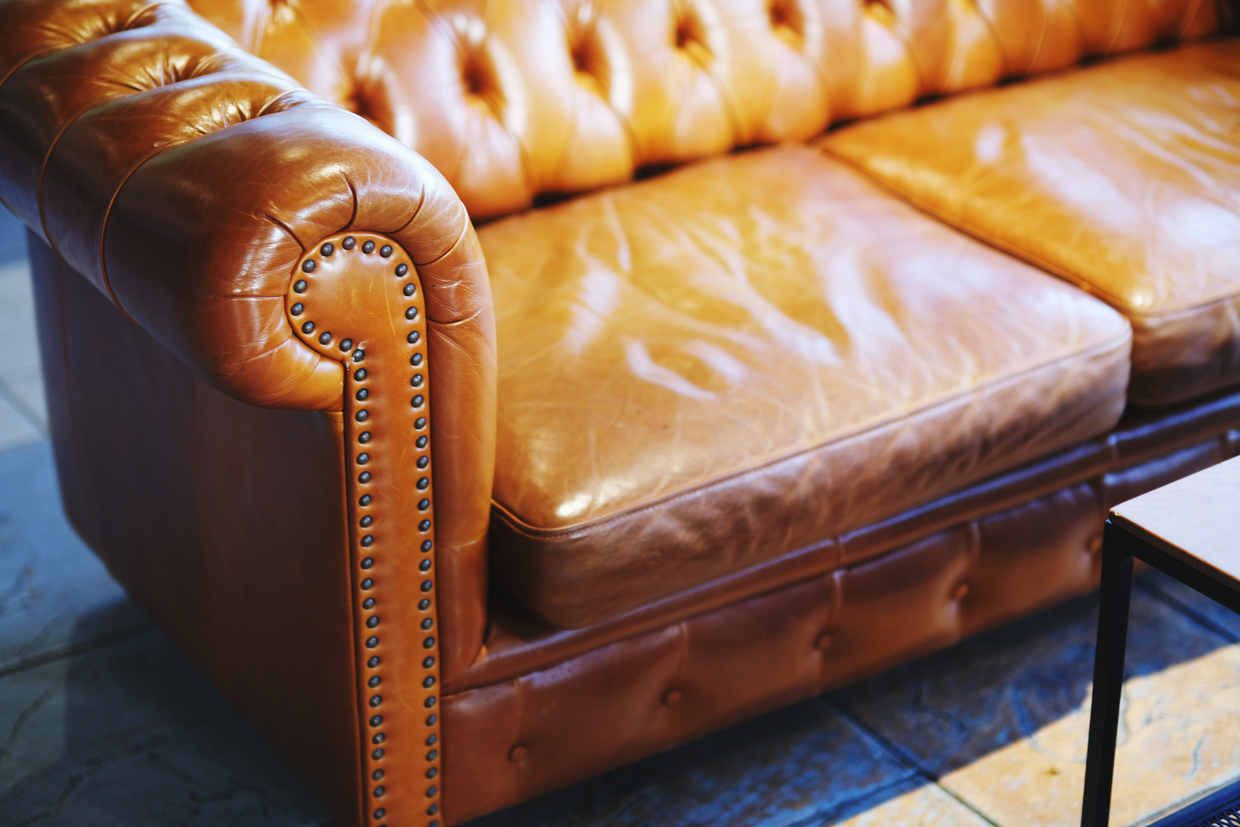
Sometimes called protected leather, pigmented leather is the most common type found in domestic sofas. It has a surface coating that provides reasonable resistance to soiling and fading. This makes it the most forgiving type for home cleaning.
Regular wiping with a slightly damp cloth helps remove surface dust and light soiling. A leather-specific cleaner can be used periodically, but always test on a hidden area first and follow the product instructions carefully.
Aniline leather
Aniline leather is dyed throughout with soluble dyes and has no protective surface coating. This gives it a natural, soft appearance but makes it considerably more vulnerable to staining, moisture and fading.
Home cleaning of aniline leather should be limited to gentle dusting and prompt blotting of spills. Water can leave permanent marks on aniline leather if not handled carefully. For significant soiling or staining, professional cleaning is strongly recommended.
Semi-aniline leather
Semi-aniline leather has a light surface coating that offers slightly more protection than pure aniline leather, while retaining much of its natural feel. It sits between pigmented and aniline in terms of durability and ease of care.
Gentle maintenance cleaning is generally appropriate, but care should still be taken with moisture and cleaning products. A professional assessment is advisable if staining or heavy soiling is present.
Nubuck and suede
Nubuck is buffed on the grain side to create a soft, velvety texture. Suede is produced from the underside of the hide. Both are highly susceptible to staining and moisture damage, and neither is well suited to home cleaning beyond light brushing.
These materials should be treated by a professional if cleaning beyond routine maintenance is needed.
General care for all leather types
Regardless of leather type, keeping your sofa out of direct sunlight and away from heat sources helps prevent drying and cracking. Conditioning treatments applied by a professional can help maintain the suppleness of the leather over time.
Avoid using household cleaning products, baby wipes, alcohol-based solutions or products not specifically formulated for leather. These can strip the finish or cause permanent discolouration.
Choosing a trusted professional
Leather sofa cleaning requires an understanding of how different leather types respond to moisture, cleaning products and handling. A trained professional will identify the leather type before any cleaning takes place and choose the appropriate method accordingly. Members of the National Carpet Cleaners Association (NCCA) are trained and insured to clean and restore leather furniture safely.
Above all, professional leather sofa cleaning can restore appearance and protect your furniture for years to come. You can find a trained, insured NCCA cleaner using our directory.