A basic guide for spot & stain removal from The National Carpet Cleaners Association.
Please feel free to download the Spot & Stain Removal Guide.
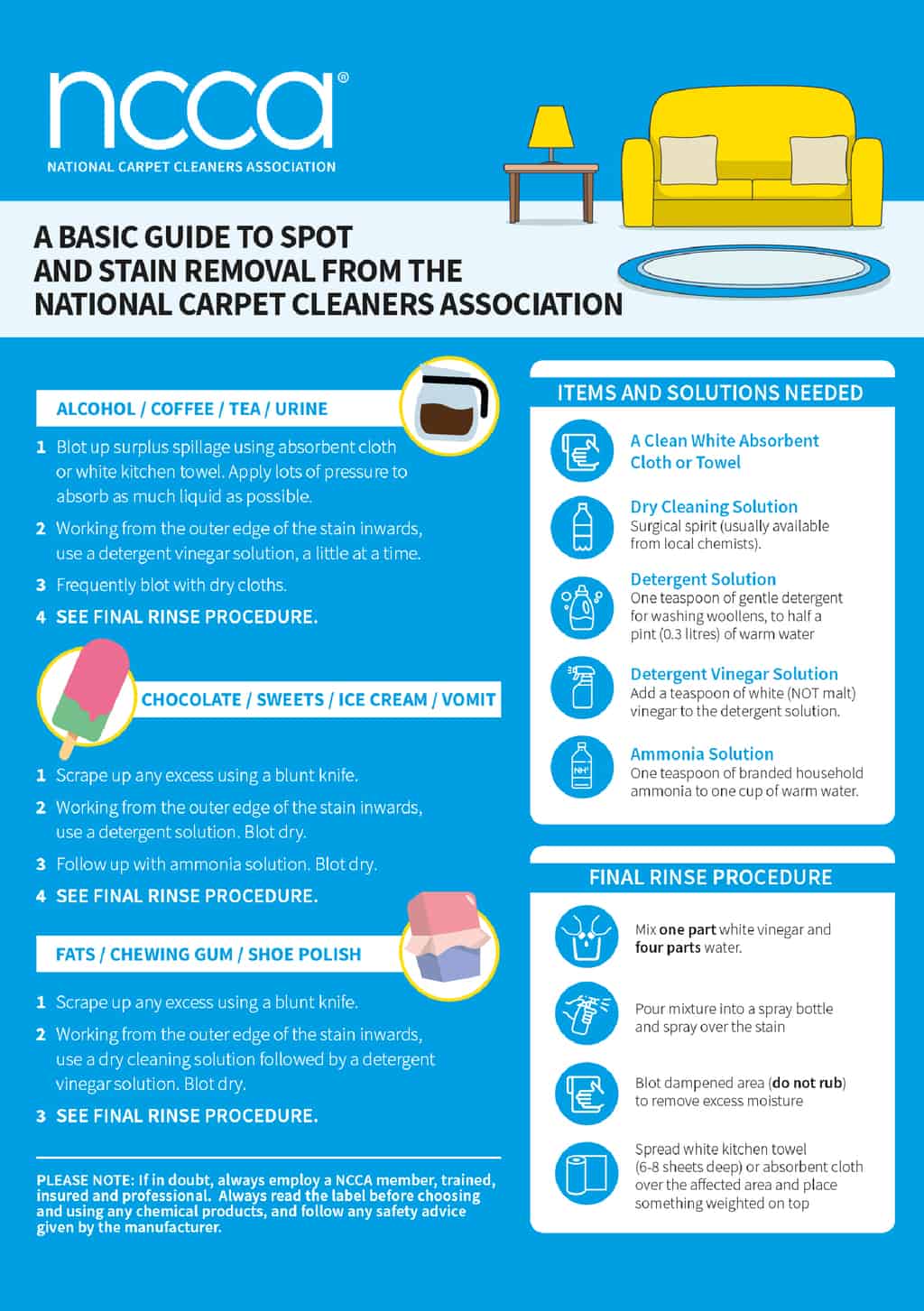
ALCOHOL / TEA / COFFEE / URINE
CHOCOLATE / SWEETS / ICE CREAM / VOMIT
FATS / CHEWING GUM / SHOE POLISH
ITEMS & SOLUTIONS NEEDED
FINAL RINSE PROCEDURE
Images: Copyright © NCCA
Fabric dining chairs are a stylish and comfortable addition to any dining room, but they can accumulate dirt, stains and grime over time.
Whether it's spilled food, everyday dust or pet hair, cleaning your fabric dining chairs doesn’t have to be a daunting task. Follow these five simple steps to keep your chairs looking fresh and inviting.
The first step in cleaning fabric dining chairs is to remove any loose dirt, dust and crumbs that may have settled on the surface. Use the upholstery attachment on your vacuum cleaner to gently go over the fabric, paying special attention to the seams and crevices where dirt tends to accumulate. This will make the cleaning process easier and more effective.
Related: How to Protect Your Carpets and Upholstery from Everyday Wear and Tear
It’s important to address any visible stains promptly to avoid them setting into the fabric. Start by checking the care label on your chairs for cleaning instructions.
For most fabric chairs, you can make a gentle cleaning solution by mixing warm water with a small amount of mild dish soap or fabric cleaner. Dip a clean cloth into the solution, wring it out to remove excess moisture and gently blot the stained area. Be sure to test a hidden area first to ensure the solution doesn’t cause any discolouration.
If the stains are stubborn, you may need a fabric cleaner that’s designed specifically for upholstery. Sprays that target tough stains are widely available, but be sure to follow the manufacturer’s instructions for use.
Apply the cleaner to the stained area, allow it to sit for the recommended time and then blot it away with a clean cloth.
Once the spots are cleaned, it’s time to freshen up the entire chair. Using the same gentle cleaning solution or a mild upholstery cleaner, lightly spray the fabric or apply it with a cloth. Avoid over-wetting the fabric, as too much moisture can cause damage or discolouration.
Gently scrub the surface in circular motions to lift dirt and grime. Be sure to go over every part of the chair, including the back and sides.
After cleaning, allow the fabric to air dry completely. Never use a hairdryer or other heat sources to speed up the process, as this can cause the fabric to shrink or warp. Once dry, use a fabric brush or upholstery brush to gently fluff the fibres back to their original texture. This will help restore the chair’s appearance and prevent it from becoming matted.
Cleaning fabric dining chairs doesn’t have to be a complicated or time-consuming task. By following these five simple steps, you can keep your chairs looking fresh and inviting. If you’d rather leave it to the professionals, consider hiring a cleaning expert.
The National Carpet Cleaners Association (NCCA) has certified cleaners who can handle your upholstery needs with care and precision. For expert upholstery care, contact a certified NCCA member near you and keep your fabric dining chairs in top shape. Simply visit our directory to find a trusted professional!
Rugs add warmth and character to any room. But over time, exposure to sunlight, foot traffic and general wear can cause them to lose their vibrancy.
If your rug has become faded, don’t worry! There are several methods you can try to restore its beauty and bring it back to life.
One of the most effective ways to restore a faded rug is by applying a rug dye. This method can work wonders, especially for wool or synthetic rugs that have lost their colour. However, most plastic fibre rugs will not accept a dye.
You can purchase rug dyes from some home improvement stores or online. Before applying the dye, make sure to clean the rug thoroughly. Then, follow the manufacturer’s instructions carefully to ensure an even application.
While this method may take some time and effort, it can result in a vibrant and restored rug.
Be aware: Dyeing a rug carries some risk. Results can be uneven, colours may not match expectations and mistakes are often permanent. If you’re working with a valuable rug or family heirloom, it’s best to avoid this method and skip to tips 3-5 below.
For small faded areas, fabric paint can be an easy fix. Choose a paint designed for textiles or rugs, which can be applied directly to the faded sections. Test the paint on a hidden area first to ensure the colour is compatible with your rug.
Fabric paint is particularly useful for intricate designs or areas where the colour has worn away but the rest of the rug is still in good condition.
Be aware: As above, fabric paint comes with risks. You’re relying on your own ability and mistakes will be permanent. If you’re working with a valuable rug or family heirloom, we’d recommend avoiding this step and trying the tips below.
While sunlight causes fading, proper management of sunlight exposure can help prevent further damage. If your rug is fading due to constant exposure to sunlight, move it to a shaded area for a while.
Alternatively, use curtains, blinds, or UV-protective films on windows to limit the direct sunlight on your rug. This won't fix the existing fade, but it can help prevent additional fading in the future.
Related: How to Protect Your Carpets and Upholstery from Everyday Wear and Tear
If your rug is particularly valuable or the fading is extensive, it may be worth investing in professional cleaning and restoration services.
Professional rug cleaners have the knowledge and experience to restore the colour and integrity of your rug using specialised treatments. They may use techniques such as deep cleaning, re-dyeing or applying protective coatings to restore its former beauty.
Once your rug is restored, taking steps to prevent future fading is key to keeping it looking vibrant. Regular cleaning helps preserve its colours, and rotating your rug occasionally can prevent certain areas from becoming excessively faded due to constant wear or sun exposure.
Additionally, investing in rug pads can protect the fibres from damage and wear, giving your rug a longer lifespan.
A faded rug doesn’t have to be the end of the road for your beloved piece. With the right methods, you can bring back its vibrancy and extend its life. But if you're unsure about tackling it yourself, don’t hesitate to hire a professional cleaner.
For expert care and maintenance, contact a member of the National Carpet Cleaners Association (NCCA) today. Our certified professionals can help restore your rug and address any concerns you may have. To find a professional cleaner near you, simply visit our directory!
Berber loop pile carpets are a popular choice for many homes due to their durability and attractive appearance. However, cleaning Berber carpets can be tricky if you don’t follow the right methods. Common issues such as snags, wick-back and browning can occur if the carpet isn't maintained properly. Here’s how to clean your Berber carpets while avoiding these problems.
One of the most common issues with Berber carpets is snags. The looped texture of Berber carpets can make them prone to pulling, which can result in visible damage. To avoid this:
Wick-back occurs when cleaning solutions used on the carpet don't completely rinse out, causing stains to reappear after cleaning. Berber carpets, like all carpets, require proper rinsing to avoid this issue. To prevent wick-back:
“Browning” is a common issue after cleaning Berber carpets. This occurs when the carpet fibres absorb too much moisture, causing a chemical reaction that leads to discolouration. To avoid browning:
To maintain your Berber carpet’s appearance and longevity, regular care is essential:
Cleaning Berber carpets doesn’t have to be difficult if you know how to avoid common issues like snags, wick-back and browning. But if you’re unsure about cleaning your carpet yourself, don’t hesitate to hire a professional carpet cleaner. They have the knowledge and equipment to keep your Berber carpet in top condition.
For expert carpet care and maintenance, contact a member of the National Carpet Cleaners Association (NCCA) today. Our certified professionals can help you maintain your carpet and address any concerns you may have. To find a professional carpet cleaner near you, simply visit our directory!
As a business owner in the carpet cleaning industry, offering 24/7 emergency services can seem like a lucrative opportunity. After all, emergencies don’t keep regular hours, and offering round-the-clock services could differentiate your business and attract more customers.
But is it the right move for your business? Let’s weigh the pros and cons of offering 24/7 emergency carpet cleaning services.
Offering emergency services can open up a whole new stream of income for your business. Customers experiencing carpet-related emergencies, such as spills, water damage or accidents, may be willing to pay a premium for prompt attention outside regular business hours. This can lead to higher profits, especially if your competitors aren’t offering this service.
In a competitive market, having the ability to offer emergency services can set your business apart. Many customers may find it reassuring to know they can rely on a cleaning service at any time of day or night. This could lead to more bookings and repeat customers who value your flexibility and responsiveness.
24/7 availability is attractive to a wide range of clients, including commercial properties that may require emergency cleaning due to unexpected incidents such as floods or stains caused by large groups of people. Offering round-the-clock services could open doors to corporate contracts or partnerships that may not have otherwise been interested in your business.
Being known for reliability can enhance your reputation in the community. Customers experiencing a carpet emergency may share their positive experiences with friends and family, increasing your business’s visibility through word of mouth. This can strengthen customer loyalty and trust in your services.
Running a 24/7 service comes with additional operational costs. You’ll need to hire staff to cover night shifts, which could result in higher payroll expenses. Additionally, there may be extra costs for equipment and cleaning supplies that are used more frequently when servicing clients outside regular hours.
Providing emergency services means you’ll have to be prepared to work at all hours of the day and night. This can put a strain on your staff, leading to burnout or decreased morale over time. It's important to assess whether you can handle the added pressure and whether your team is capable of managing emergency jobs without compromising the quality of your regular work.
While emergency situations often demand quick responses, there’s always a risk that the quality of your service could suffer if you're rushing to meet tight deadlines or working with limited staff. Clients may have heightened expectations for 24/7 services, and maintaining a high standard of work under pressure could be challenging.
Being available around the clock can create logistical hurdles. You’ll need to ensure that your team is always available and that equipment and supplies are well-stocked and ready to go at all times. Coordinating such services may also require additional planning and organisation, particularly if you’re handling multiple emergency jobs simultaneously.
Offering 24/7 emergency carpet cleaning services can be a lucrative and reputation-boosting option for your business, but it comes with its own set of challenges. If you do decide to offer emergency services, ensure you have the proper infrastructure in place to manage the increased demand while maintaining a high standard of service.
If you want to grow your business sustainably, whether that’s 24/7 or 9-5, the National Carpet Cleaners Association can help. We provide training and support to help members grow while maintaining high professional standards. Become a member today to take the first step towards growing your carpet cleaning business.
This article outlines the key points that should be included in carpet cleaning service agreements.
Carpet cleaning is carried out in customers’ homes and commercial premises, often involving valuable floor coverings and furnishings. Without clear written terms, misunderstandings can quickly develop.
A service agreement sets out what work will be carried out, what limitations apply and where responsibility lies. This clarity protects both the cleaner and the customer.
Your agreement should clearly identify both parties. This includes your business name and contact details, along with the customer’s name and the address where the work will be completed.
Clear identification is particularly important where landlords, tenants or managing agents are involved.
The services being provided should be clearly described. This may include carpet cleaning, stain treatment or odour reduction.
Avoid vague wording. A clear scope of work prevents disputes about what was included and protects you if a customer expects services that were not agreed.
Carpets vary widely in fibre type, age and condition. Not all stains, odours or wear can be removed through cleaning.
Your agreement should explain that cleaning improves appearance and hygiene but does not guarantee full stain removal or restoration. Managing expectations at this stage is one of the most effective ways to prevent complaints.
It is important to state that you are not responsible for damage or defects that existed before cleaning. This includes wear, colour loss, pile distortion, pet damage or previous cleaning issues.
A pre-clean inspection supports this section and should be carried out as standard practice.
Some carpets carry unavoidable risks, such as colour bleed, shrinkage or texture change, particularly with natural fibres or older installations.
Your agreement should confirm that these risks have been explained and accepted where relevant. This demonstrates transparency and professional awareness.
The agreement should outline what the customer is responsible for before work begins. This may include clearing small items, providing access and securing pets.
Clarifying responsibilities helps avoid delays, safety issues and disputes on the day of cleaning.
Pricing should be clearly stated, along with when payment is due. If additional charges may apply for heavily soiled carpets or additional services, this should be explained in advance.
Clear pricing reduces misunderstandings and supports professional trust.
Drying times vary depending on carpet type and conditions. Your agreement should explain that times are estimates and that restricted airflow or early use can affect results.
You may also reference aftercare advice, noting that failure to follow guidance can impact the final outcome.
A simple complaints process should be included. This should explain how and when customers should raise concerns.
Setting reasonable timeframes for reporting issues helps protect your business from delayed or unrelated claims.
Missed appointments and late cancellations cost time and income. Your agreement should include a cancellation policy and any applicable charges.
This supports scheduling efficiency and clear communication.
Service agreements are a key part of risk management and professional credibility. Poor documentation increases the likelihood of disputes and insurance claims.
NCCA members are expected to communicate clearly, manage risk and work to recognised standards. A clear service agreement supports these expectations and reflects a professional approach.
Service agreements should be reviewed regularly to ensure they remain accurate and relevant.
The National Carpet Cleaners Association provides training, guidance and support to help members maintain high professional standards. Learn more about NCCA membership, training and resources to strengthen your business and protect your reputation.
This checklist explains what tenants should consider when dealing with carpets before moving out.
Start by reviewing your tenancy agreement. Many agreements include clauses relating to carpet condition or professional cleaning at the end of the tenancy. While landlords cannot demand unnecessary services, they can reasonably expect carpets to be returned in a clean condition, allowing for fair wear and tear.
Knowing what you agreed to helps avoid misunderstandings later.
Carpets naturally deteriorate over time. Light traffic marks, gradual fading and minor flattening are usually considered fair wear and tear, especially in longer tenancies.
However, heavy staining, spills, burns, strong odours or excessive soiling are not. These issues are more likely to be flagged during the check-out inspection and could affect your deposit.
Before moving out, take time to inspect every carpeted area. Look for visible stains, darkened walkways, pet hair and lingering smells. Areas near doors, sofas and beds often show the most wear.
Early inspection gives you time to decide whether professional cleaning is needed rather than leaving it until the last moment.
DIY carpet cleaning attempts are a common cause of problems at end of tenancy. Over-wetting, incorrect products or aggressive scrubbing can cause shrinkage, colour loss or watermarking. These issues may be worse than the original soiling and can lead to deductions.
Household carpet machines are also easy to misuse and often leave carpets too wet, increasing the risk of odours or mould.
If there are specific stains, avoid experimenting with home remedies. Some substances can permanently set stains or bleach the carpet fibres.
If a stain does not improve quickly with gentle blotting, it is safer to stop and seek professional advice rather than risk making the damage worse.
Professional carpet cleaning is often the safest way to achieve an acceptable standard at the end of a tenancy. A trained cleaner can assess the carpet type, level of soiling and any existing damage before cleaning.
Professional cleaning is particularly advisable for heavily used carpets, pet-related issues or noticeable odours. It also provides reassurance that the work has been carried out properly.
Whether you clean the carpet yourself or use a professional, keep records. Receipts, invoices or written confirmation can be helpful if there is a dispute later.
Photos taken after cleaning, once carpets are dry, can also support your position if questions arise during deposit negotiations.
Carpet cleaning should be one of the final tasks before you hand back the keys. Cleaning too early increases the risk of re-soiling during the move-out process.
Ensure carpets have enough time to dry properly before the check-out inspection, as damp carpets can raise concerns even if they are clean.
If you use a professional service, choosing a reputable cleaner matters. Members of the National Carpet Cleaners Association are trained, insured and work to a recognised Code of Practice. This reduces the risk of damage and provides confidence that carpets are cleaned safely and appropriately.
End of tenancy carpet issues are often avoidable. Understanding fair wear and tear, avoiding risky DIY methods and using professional help when needed all improve your chances of a smooth check-out.
If you want added reassurance, you can find a trained, insured NCCA carpet cleaner using the association’s directory. Professional carpet cleaning can help ensure carpets meet expected standards and reduce the risk of deposit disputes.