Warning Signs of Carpet Beetle Damage and How to Solve It
Carpet beetles are a common household pest in the UK, and their damage often goes unnoticed until it becomes significant. They feed on natural fibres found in carpets, rugs, upholstery and clothing, which means early detection is important for preventing long term harm. This guide explains the main warning signs of carpet beetle activity and outlines safe, practical steps for homeowners.
Why carpet beetle awareness matters
Carpet beetle larvae cause the damage, not the adult insects. They feed on wool, silk, leather, feathers and other natural materials. If left untreated, they can create patches of bare carpet, thinning fibres and visible holes in nearby textiles. Understanding the early signs helps prevent ongoing damage and reduces the risk of the problem spreading to other areas of the home.
Typical signs of carpet beetle damage
Carpet beetle activity can be subtle. Many homeowners only notice the issue once the damage becomes extensive. The following indicators are among the most common.
Bare or thinning patches
The larvae often feed in concentrated areas, leaving small bald patches or thinning fibres. These areas tend to appear along skirting boards, under furniture or in dark, undisturbed spaces.
Irregular holes in carpets or textiles
Damage caused by larvae is usually uneven, with soft edges. This differs from clean cut holes made by wear or snagging. Holes may also appear in wool clothing, blankets or felt items stored nearby.
Shed larval skins
Carpet beetle larvae shed their skins as they grow. These cast skins look like small, dry, brown husks and are often found in corners, wardrobes, behind furniture or under rugs.
Small beetles near windows
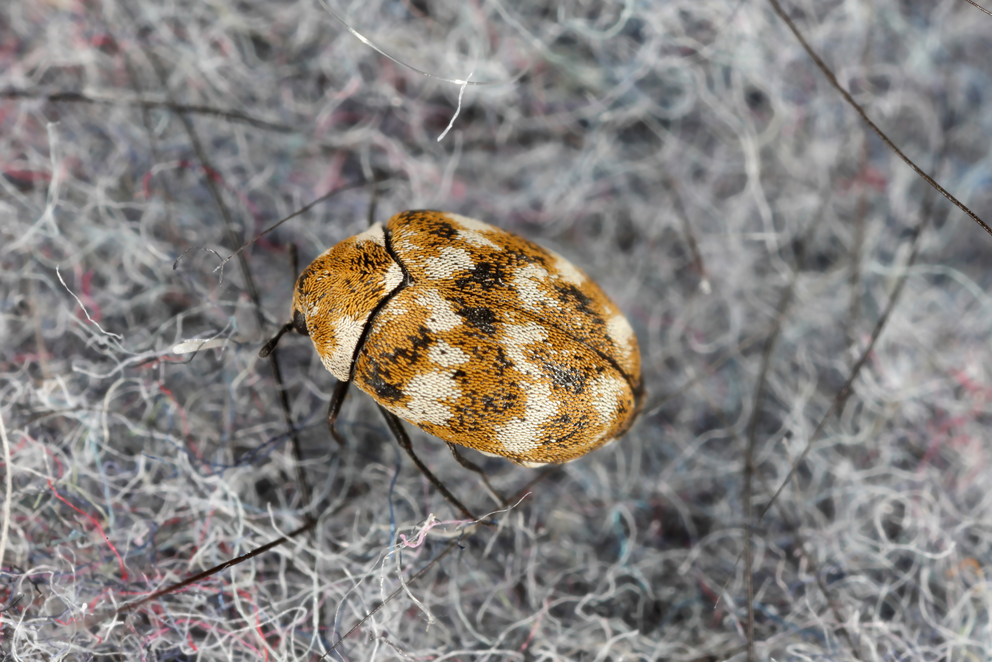
Finding adult carpet beetles around window frames is a common sign that larvae may be present somewhere in the home. Adults are attracted to light, but their presence often indicates an indoor breeding site.
Fine, powdery debris
As larvae feed, fibres break down into fine dust. This debris collects below damaged areas, making it easier to spot when cleaning or moving furniture.
Where carpet beetles tend to hide
Carpet beetles prefer dark, undisturbed areas with access to natural fibres. Common hiding places include beneath sofas, under heavy furniture, along the edges of carpets, inside wardrobes, and behind radiators. Stored textiles such as blankets and wool garments are particularly at risk if rarely used.
Safe steps homeowners can take
There are practical measures that can help reduce the risk of further damage, but care is needed to avoid harming carpets or furnishings.
Vacuum regularly
Frequent vacuuming helps remove larvae, eggs and debris. Pay extra attention to edges, corners and areas under furniture where larvae may be feeding. This simple routine can significantly slow the progression of damage.
Clean surrounding textiles
Wool blankets, throws and clothing stored near damaged areas should be checked and cleaned. Washing or dry cleaning these items removes larvae and helps prevent the infestation spreading.
Reduce access to food sources
Larvae feed on natural fibres, pet hair and dust. Maintaining good housekeeping and keeping areas around carpets clean can make the environment less favourable to them.
Why professional help is recommended
Although vacuuming and good hygiene help, they do not replace the need for specialist treatment when carpet beetles are active. DIY insecticide use carries risks, including incorrect application, exposure to chemicals and potential damage to carpets or furnishings. A trained professional can identify the level of infestation, locate hidden activity and apply safe, targeted treatments.
Professional cleaners who are experienced in textile insect control can also assess the condition of damaged carpets, advise whether repairs are possible and ensure the area is cleaned safely afterwards. NCCA members are fully trained, insured and follow recognised standards of practice.
Preventing future problems
Once the infestation is treated, ongoing maintenance is important. Regular vacuuming, careful storage of natural fibre items and routine professional cleaning all help protect carpets from further damage. Areas that were previously affected should be monitored closely, as early signs are easier to manage than long term damage.
Final guidance
Carpet beetle damage can develop quietly, but spotting the signs early makes a major difference. If you notice thinning areas, irregular holes or shed skins, it is important to act promptly and seek expert help. For safe, reliable support, you can find a trained, insured NCCA cleaner using our directory.